


How Brain Connectivity Impacts Mood, Focus, and Behaviour
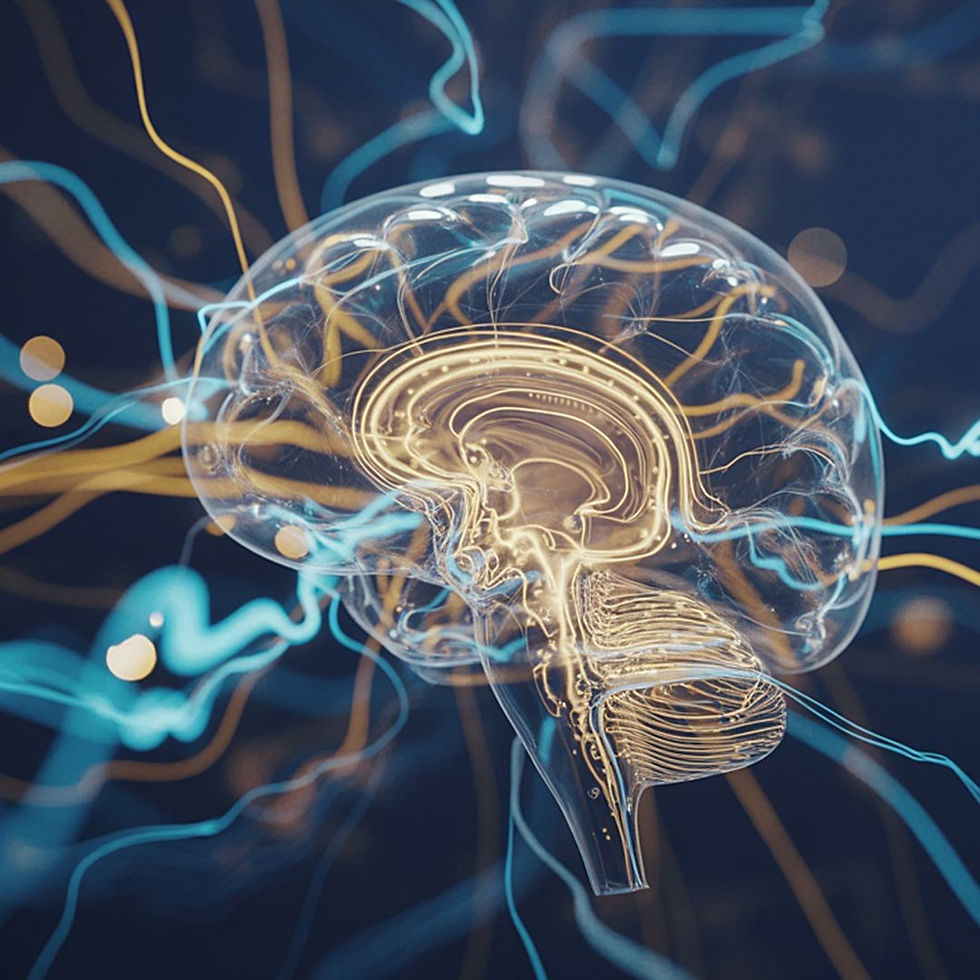
Brain connectivity and mood are deeply linked because every thought, emotion, and behaviour depends on how different regions of the brain communicate with each other. When this communication is efficient, individuals tend to experience emotional stability, better focus, and balanced behaviour.
However, when brain connectivity becomes disrupted or imbalanced, it can contribute to difficulties in mood regulation, attention, and behavioural control. This is why understanding brain connectivity is essential for conditions related to mental health, cognition, and emotional wellbeing.
What Is Brain Connectivity And How Does It Relate To Mood?
Brain connectivity refers to the way different regions of the brain communicate and coordinate with each other. Instead of working independently, brain regions function as interconnected networks that manage thinking, emotions, and behaviour.
Mood regulation is one of the most important outcomes of this communication system.
In simple terms:
Strong connectivity = balanced mood and emotional control
Weak or disrupted connectivity = mood instability and emotional challenges
Brain networks involved in mood regulation include emotional processing systems, cognitive control systems, and stress-response pathways. When these systems work in harmony, emotional stability improves naturally.
How Does Brain Connectivity Affect Focus And Behaviour?
Brain connectivity plays a central role in attention, decision-making, and behavioural responses. The brain constantly processes internal and external signals, and how well it integrates this information determines how a person behaves.
When connectivity is healthy:
Focus becomes more stable
Emotional reactions are more regulated
Behaviour is more controlled and adaptive
When connectivity is disrupted:
Attention may fluctuate
Emotional responses may feel intense or unpredictable
Behaviour may become impulsive or inconsistent
This is because different brain networks are not communicating efficiently, making it harder to regulate thoughts and actions in real time.
Why Is Brain Connectivity Important In Mental Health Conditions?
Many neurological and developmental conditions are linked with differences in brain connectivity. These are not caused by a single brain region, but by how networks communicate.
ADHD and brain connectivity
In ADHD, brain networks responsible for attention and executive functioning may not communicate efficiently. This can result in:
Difficulty sustaining focus
Impulsivity
Mental restlessness
This is where structured approaches, such as best adult ADHD treatment center care models, often focus on improving brain regulation and connectivity support.
Autism spectrum disorder and brain connectivity
In autism spectrum disorder, differences in connectivity may affect how sensory, social, and communication networks interact. This can influence:
Social interaction patterns
Sensory processing
Behavioural responses
Support approaches such as autism spectrum disorder treatment often aim to understand and support these neural communication differences.
PTSD and brain connectivity
In PTSD, brain networks involved in fear response and emotional regulation may become overactive or poorly regulated. This can lead to:
Heightened stress response
Emotional reactivity
Difficulty processing past experiences
This is often addressed in PTSD treatment, where emotional regulation and brain balance are key focus areas.
How Do TMS and MeRT Support Brain Connectivity?
Transcranial Magnetic Stimulation (TMS) is a non-invasive neuromodulation approach that gently stimulates targeted brain regions. Its goal is to support healthier brain activity patterns and improve communication between brain networks.
From a brain connectivity perspective, TMS may help by:
Supporting neural communication pathways
Encouraging more balanced brain activity
Helping regulate mood-related circuits
This makes it a valuable supportive approach in conditions involving mood and attention challenges.
What is MeRT, and How Is It Different From Traditional TMS?
MeRT (Magnetic e-Resonance Therapy) builds on the principles of TMS but adds a personalized layer through EEG brainwave mapping.
Instead of using a standard approach for everyone, MeRT first analyzes how an individual's brain networks are functioning.
This allows for a more tailored approach that may help:
Identify brainwave irregularities
Guide targeted stimulation protocols
Support improved neural synchronization
In simple terms:
TMS = standardized brain stimulation
MeRT = personalized, EEG-guided brain connectivity support
Who Can Benefit From Brain Connectivity-Based Approaches?
Brain connectivity-focused approaches are generally considered for individuals experiencing challenges related to mood, focus, and behaviour regulation.
1. Individuals with attention difficulties
People experiencing attention challenges may benefit from approaches that support network communication and cognitive control.
2. Individuals on the autism spectrum
Support may focus on improving how different brain systems coordinate sensory and social processing.
3. Individuals with trauma-related symptoms
For those experiencing trauma-related emotional patterns, brain connectivity support may help improve emotional regulation and stress response balance.
What Are The Signs Of Disrupted Brain Connectivity?

Brain connectivity imbalances may present in different ways depending on the individual, but common patterns include:
Difficulty concentrating for long periods
Emotional sensitivity or mood swings
Mental fatigue or cognitive slowing
Challenges in emotional regulation
Overreaction to stress or triggers
These signs often reflect communication inefficiencies between brain networks rather than isolated issues in one region.
Can Brain Connectivity Be Improved?
Yes, research in neuroscience and neuromodulation suggests that brain connectivity can adapt over time through neuroplasticity.
Approaches such as TMS and MeRT are designed to support this adaptability by encouraging healthier communication patterns between brain networks.
The goal is not to "change who a person is," but to support better synchronization between brain systems involved in mood, focus, and behaviour.
Key Takeaways
Brain connectivity determines how well different brain regions communicate
It plays a key role in mood regulation, attention, and behaviour control
Disrupted connectivity is linked with ADHD, autism spectrum disorder, and PTSD
TMS and MeRT are neuromodulation approaches that support brain network balance
Personalized approaches like MeRT focus on individual brainwave patterns for targeted support
Frequently Asked Question
What is brain connectivity in simple terms?
It is how different parts of the brain communicate and coordinate functions like mood, focus, and behaviour.
How does brain connectivity affect mood?
Mood depends on the balance between emotional and cognitive brain networks.
Can brain connectivity influence attention problems?
Yes, attention is strongly linked to how well brain networks communicate.
What is the difference between TMS and MeRT?
TMS is standardized stimulation, while MeRT uses EEG mapping for personalization.
Are brain networks fixed or changeable?
They are adaptable due to neuroplasticity.
Conclusion
Brain connectivity plays a central role in shaping mood, focus, and behaviour by influencing how different brain networks communicate. When these connections are balanced, emotional stability and cognitive clarity improve. Disruptions in connectivity may contribute to mental health challenges, but advanced neuromodulation approaches like TMS and MeRT can support healthier brain network functioning and overall neurological balance over time.
Take the Next Step Toward Better Brain Connectivity at Neuromed Clinic
If you or a loved one is struggling with mood instability, attention difficulties, or behavioural challenges, understanding brain connectivity is the first step toward meaningful change. At Neuromed Clinic, we specialize in advanced neuromodulation approaches like TMS and MeRT that support healthier brain network communication.
Connect with our team to learn whether a personalized evaluation may help guide your next step toward improved cognitive and emotional wellbeing.


Original technical writing from people who actually build and operate systems tends to age better than trend-driven posts. The Biwai platform publishes articles across frontend, backend, ops, and tooling, with new material added continuously.